
TL;DR — Quick Q&A Summary
- What’s the difference between TC, REVA, and Listing Coordinator? It comes down to focus: transactions, general support, or listing prep.
- Which role is the most structured? Transaction Coordinators follow strict timelines and compliance.
- Which role offers the most variety? REVAs handle a mix of admin and marketing tasks.
- Which role is more creative? Listing Coordinators focus on marketing and presentation.
- What’s the biggest mistake when choosing? Picking based on trends instead of work style.
- How do you choose correctly? Understand how each role actually works day to day.
If you’ve been looking into real estate support roles, you’ve probably seen all three of these mentioned: Transaction Coordinator, Real Estate Virtual Assistant, and Listing Coordinator.
On paper, they sound similar.
In real life, they feel completely different.
And this is where people make the wrong decision.
They choose based on what sounds good, not based on how the work actually feels day to day.Heads up: This post may include affiliate links. If you choose to make a purchase through one of them, I may earn a small commission—at no additional cost to you. You can check out the full disclosure for more details.

Heads up: This post contains affiliate links. If you choose to make a purchase through them, I may earn a small commission at no additional cost to you. I only recommend tools and services I personally use or trust. You can read the full affiliate disclosure here
Table of Contents
Before You Choose a Role, Understand This First
Most people don’t struggle because they don’t have options.
They struggle because they don’t understand the trade-offs.
Every role gives you something.
Every role also takes something from you.
If you don’t understand both sides, you’ll pick based on assumptions—and that’s where frustration starts.
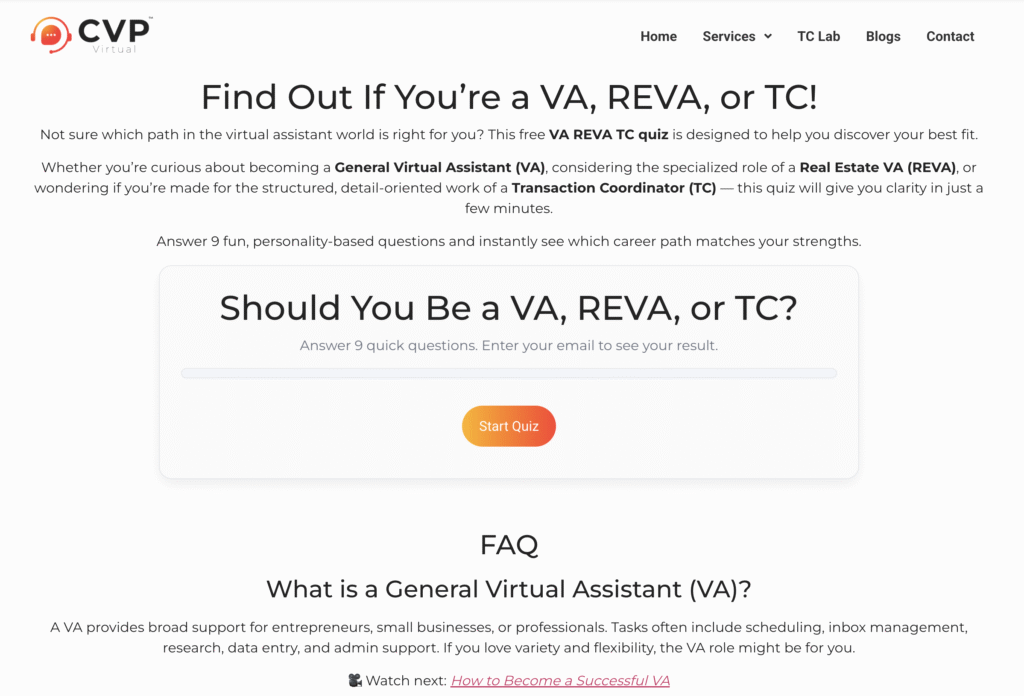
If you’re unsure where you fit, don’t guess.
That will give you direction faster than trying to figure it out on your own.
What Does a Transaction Coordinator Actually Do?
A Transaction Coordinator manages everything from contract to close.
That means once a deal is signed, they are responsible for making sure it moves forward correctly.
This includes:
- Tracking deadlines
- Coordinating communication between all parties
- Managing documents and compliance
- Making sure nothing falls through the cracks
But what matters more than the task list is how the role feels.
This is a structured, process-driven role.
You are working inside a timeline that doesn’t adjust to your mood, your schedule, or your workload.
If something is due, it’s due.
That’s what makes the role valuable.
And that’s also what makes it challenging for the wrong person.
If you want a deeper breakdown of what this role actually looks like in practice, read: What does a transaction coordinator actually do?
What Does a Real Estate Virtual Assistant (REVA) Actually Do?
A REVA supports the agent’s business as a whole.
Instead of focusing on one part of the process, they help across multiple areas.
That might include:
- Managing email and calendars
- Updating CRMs
- Handling follow-up
- Creating social media content
- Supporting marketing efforts
At first glance, this sounds easier.
In reality, it’s just different.
Because instead of working inside a structured process, you’re working across multiple moving parts.
Your day can shift quickly.
Priorities change.
Tasks vary.
Some people love that.
Others find it exhausting.
What Does a Listing Coordinator Actually Do?
A Listing Coordinator focuses on everything that happens before a property goes live.
This includes:
- Preparing listing paperwork
- Coordinating photography and staging
- Managing MLS input
- Overseeing marketing materials
- Supporting the seller-side process
Unlike a TC, this role is not steady from beginning to end.
It’s more like bursts of activity.
A listing comes in, everything moves quickly, then it slows down until the next one.
If you enjoy fast-paced coordination with a visual and marketing component, this role tends to feel more engaging.
At this point, you’ve seen how each role works individually.
Here’s a simplified way to compare them side by side so you can quickly see what stands out.
| Role | How the Work Feels | Structure Level | Income Style | Best Fit For |
|---|---|---|---|---|
| Transaction Coordinator (TC) | Predictable, deadline-driven, process-based | High | Per transaction or packages | People who like structure, systems, and clear workflows |
| Real Estate Virtual Assistant (REVA) | Varied, flexible, sometimes reactive | Medium to Low | Hourly or retainer | People who enjoy variety and multitasking |
| Listing Coordinator | Fast-paced in bursts, then slower periods | Medium | Per listing or salary | People who like coordination + marketing mix |
What No One Tells You About These Roles
This is where things get real.
Because understanding responsibilities is one thing.
Understanding how the role feels is what actually helps you choose correctly.
Transaction Coordinator Reality
This role is repetitive—but that’s the point.
You are running a process again and again, with different clients and different files.
There’s pressure, because deadlines matter.
But there’s also predictability, because the structure doesn’t change.
If you like control, clarity, and knowing what comes next, this feels natural.
If you need constant variety, it can feel limiting.
REVA Reality
This role gives you variety—but also requires boundaries.
Because when you offer “general support,” clients will often expect you to handle everything.
Without clear systems and communication, this can turn into reactive work instead of structured work.
If you like flexibility and don’t mind switching between tasks, this works well.
If you prefer clear expectations and repeatable processes, it can feel scattered.
Listing Coordinator Reality
This role sits in the middle.
You get structure—but only for part of the process.
The work tends to come in waves.
When a listing is being prepared, everything moves quickly.
When it’s done, the pace drops.
If you enjoy coordination with a visual and marketing component, this can be a great fit.
How Much Can You Earn in Each Role?
One of the biggest factors when choosing between a TC, REVA, or Listing Coordinator is income potential.
And this is where things get interesting.
In the video above, I break down realistic income ranges and how your pricing evolves as you specialize.
Here’s the key takeaway:
A general Virtual Assistant often starts with hourly rates, typically in the $20–$30 range, but that doesn’t mean that’s where you stay .
Once you specialize—whether as a REVA or a Transaction Coordinator—your earning potential increases because you’re no longer selling time.
You’re selling outcomes.
For example:
- A REVA who understands real estate can move from basic admin tasks into higher-value services like CRM optimization, client follow-up systems, and marketing support.
- A Transaction Coordinator can charge per transaction, and when you bundle services (like listing coordination or post-closing follow-up), the value of each file increases significantly.
- Listing Coordinators can charge per listing or work in-house, depending on how they structure their services.
So the real question is not:
“How much does this role pay?”
It’s:
“How do you want to structure your income?”
Because each role gives you different ways to scale.
Admin Assistant vs These Roles: What Actually Transfers?
If you’re coming from an admin background, you’re not starting from zero.
You already know how to:
- Stay organized
- Communicate with multiple people
- Handle documentation
- Follow through on responsibilities
What changes is the level of ownership.
In admin roles, tasks are often assigned.
In these roles—especially as a TC—you’re expected to know what comes next without being told.
If you want a deeper breakdown of that transition, read: How to Transition from Admin Assistant to Transaction Coordinator
And if you’re wondering whether not having a real estate background will hold you back, this will help: Can You Be a Transaction Coordinator Without Real Estate Experience?
How to Choose the Right Role (Without Guessing)
Instead of asking “Which one is better?”, ask:
What kind of work do I actually enjoy doing every day?
If you prefer structure, repetition, and clear processes, Transaction Coordination is the strongest fit.
If you enjoy variety, flexibility, and working across different areas, REVA work makes more sense.
If you like coordinating moving pieces with a marketing angle, listing coordination sits in between.
This is less about skills and more about how you operate.
Where Most People Get This Wrong
They choose based on:
- what seems easier
- what they’ve seen on social media
- what someone else recommended
Instead of choosing based on:
- how they work
- how they handle pressure
- how they manage structure vs flexibility
That’s why people switch roles after starting.
Not because they picked the wrong industry—but because they picked the wrong fit.
What Happens After You Choose
Once you’re clear on your direction, everything else becomes easier.
You know what to learn.
You know how to position yourself.
You know what kind of clients to look for.
If you’re leaning toward Transaction Coordination and want a structured way to build your skills, start here:
Free Training: 3 Principles to Launch Your TC Business on Your Own Terms (Without Endless Research)
And if you want a full system with workflows, templates, and step-by-step guidance:
Key Takeaways
- These roles are not interchangeable
- The biggest difference is structure vs flexibility
- Choosing the wrong fit leads to frustration
- Understanding how the work feels matters more than the task list
- Clarity makes everything else easier
FAQs About TC vs. REVA vs. Listing Coordinator
Can one person do all three roles?
Yes, but it can become overwhelming without clear systems and boundaries.
Do you need experience to start?
Not necessarily, but you need to understand the process of the role you choose.
Which role is most in demand?
Transaction Coordinators are consistently in demand because every deal requires compliance and coordination.
Can these roles be done remotely?
Yes, all three can be done virtually with the right systems.
Which role is best for someone with an admin background?
All three can work, but Transaction Coordination tends to be the most natural transition for those who prefer structure.
Final Word
There is no “best” role.
There is only the role that fits how you work.
Once you understand that, the decision becomes much simpler.
Ready to Take the Next Step?
Free Training: 3 Principles to Launch Your TC Business on Your Own Terms (Without Endless Research)
If you’re ready to build a real TC business and want step-by-step systems, check out my course:
Coordination Virtual Playbook

Cecilia V. Peralta
CVP Virtual
Cecilia Peralta is a Transaction Coordinator, Realtor, and operations specialist who helps real estate professionals implement structured, efficient transaction workflows. After building her own TC business from the ground up, she now shares practical insights to help aspiring and experienced Transaction Coordinators improve their systems, communication, and service quality.